Russia Su-57 "Felon" fighter

Russia Su-57 "Felon" fighter

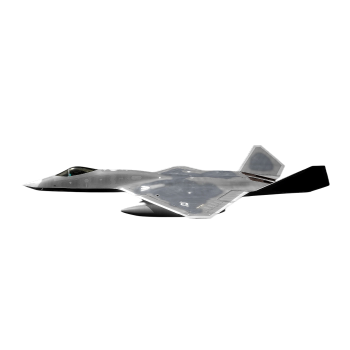
It is the fifth-generation twin-firing stealth multi-purpose fighter developed by the Russian Sukhoi Design Bureau. It is Russia's first military aircraft using stealth technology. Designed to perform air superiority and attack missions, its development began in 2002, with its first flight on 29 January 2010. Designed to have supersonic cruise capability, long battle radius, low radar cross-sectional area, super maneuverability and short take-off and landing (STOL) characteristics, while maintaining a large ground attack capability. The design includes a fusion wing-body fuselage, full-motion horizontal and vertical stabilization surfaces, with thrust vector and adjustable leading edge vortex controller to improve high angle-of-attack behavior and allow rapid stall recovery
Soviet Union Su-24MK FencerD Bomber

Soviet Union Su-24MK FencerD Bomber

It is a two-seater, double-engine swept-wing fighter-bomber developed by the Soviet Union's Sukhoi Design Bureau. It is an export model of the Su-24 series. Compared with Su-24M in performance, it is mainly for the international market and exported to Iran, Iraq, Libya and Syria. It has all-weather combat capability and is capable of carrying nuclear and regular weapons. The power system provides supersonic flight capability for two AL-21F turbojet engines. It is also equipped with advanced navigation/attack radar and terrain avoidance system, enabling it to break through at low altitude and high speed. It also has the ability to refuel in the air, increasing the combat radius and mission flexibility.
Russian MiG-35 multi-role fighter (gray)

Russian MiG-35 multi-role fighter (gray)

It is a 4-generation multi-purpose fighter developed by the Russian MiG Aircraft Group. Based on MiG-29M/M2 and MiG-29K/KUB technologies, it has improved flight performance, advanced avionics equipment and diversified precision guided weapons. The aerodynamic layout adopts a design that relaxes the longitudinal static stability, and is equipped with a three-channel four-redundant digital line flight control system and a larger thrust engine to improve maneuverability. Increased internal and external fuel loads and aerial refueling capabilities significantly increase range. Reduced radar and infrared signatures, equipped with the latest self-defense kits and redundant aircraft systems, improve survivability
Soviet La-250 "Anakonda" interceptor

Soviet La-250 "Anakonda" interceptor

It is a high-altitude high-speed interceptor prototype developed by the Soviet Union in the 1950 s and developed by the Lavochkin Design Bureau. It is designed to intercept high-altitude high-speed targets, such as the new generation of strategic jet bombers. The design requires the ability to carry two heavily K-15 275 air-to-air missiles guided by a ground-controlled radar system. The first flight took place on July 16, 1956. Design features include its slender fuselage and delta wing layout, which is intended to achieve high-speed flight and high-altitude interception capabilities. Although the project was eventually canceled, it provided valuable experience for the subsequent interceptor system.
Soviet Union M-50 Bounder Bomber

Soviet Union M-50 Bounder Bomber

It is a four-round supersonic strategic bomber developed by the Soviet Union during the Cold War and designed by the Miashev Design Bureau. Built as a response to the US B- 58 of the Hustler supersonic bomber, M-50 prototype made its first flight in 1957. Designed with delta wings and extreme speeds, it is capable of carrying supersonic long-range M-61 cruise missiles. The fuselage design was long and slim, with large delta wings, and all the fuel was stored in the fuselage because the delta wings were extremely thin and could not hold fuel. However, due to the development of intercontinental ballistic missiles and the priority of the Soviet space program, the project was eventually terminated.
Soviet Union Tu-148 long-range supersonic interceptor

Soviet Union Tu-148 long-range supersonic interceptor

It is a long-range supersonic interceptor developed by the Soviet Union's Tupolev Design Bureau in the 1960 s. The project, codenamed "148", aims to develop a new generation of long-range interceptors to replace the Tu-128 series. It adopts a variable swept wing design and is planned to be equipped with two РД-19 Р-2 engines with high-speed and long-range interception capabilities. Equipped with the "Wind 100" long-range missile and advanced avionics equipment, it has independent combat capabilities and can perform interception tasks without ground guidance. Due to the development level of the Soviet electronics industry and the air force's low demand for multi-purpose aircraft, the project ultimately failed to enter mass production.
Soviet Tu-156AEW & C aircraft

Soviet Tu-156AEW & C aircraft

It is an early warning and control (AEW & C) aircraft developed by the Soviet Tupolev Design Bureau based on Tu-154B production aircraft. It was designed as a modern variant of the Tu-126 "Moss", equipped with a new jet engine, replacing the noisy turboprop, and a new radar with better detection and tracking capabilities. the design objective is to provide more advanced airborne early warning and command and control capabilities to enhance detection, tracking, and command response to air and sea targets. The design includes improvements to the aircraft structure and systems to accommodate new mission requirements.
Soviet Yak-28P "Firebar" interceptor

Soviet Yak-28P "Firebar" interceptor

It is a dual-engine jet all-weather interceptor developed by the Soviet Union's Yakovlev Design Bureau in the late 1950 s. It is developed on the basis of Jacques -25 and is considered to be the third generation of Jacques -25. It is designed to serve as a long-range interceptor for territorial air defense, capable of intercepting missions under various meteorological conditions. In the early 1960 s, he entered the frontline aviation and homeland defense air force service and became an important force in the Soviet homeland defense air force. Although gradually decommissioned over time, it played an important role in long-range interception missions during the Cold War.
Russia MiG-29SE Fulcrum multi-role fighter

Russia MiG-29SE Fulcrum multi-role fighter

It is a multi-role fighter developed by the Russian MiKoyan Design Bureau and is an improved model of the MiG-29 series. It is designed to adapt to the changing battlefield environment, with enhanced avionics and weapon systems. Equipped with N01 radar and active jamming station, it is capable of carrying external underwing fuel tanks and up to six RW-AE active radar guided missiles, capable of attacking two targets simultaneously. The design emphasizes multi-role combat capabilities, including air-to-air and air-to-ground missions. The flight performance is excellent, with a maximum flight speed of Mach 2.35 and a service ceiling of 18,000 meters.
Soviet MiG-23UB trainer

Soviet MiG-23UB trainer

It is a two-seater trainer model in the MiG-23 fighter series developed by the Migaoyan Design Bureau of the Soviet Union, also known as the MiG-23UM. The first flight was successful in May 1969. It was modified from a MiG-23S and then from a MiG-23M. Designed to train pilots to master the operation of the MiG-23 series fighter, it retains most of the flight characteristics of the MiG-23, but has a special coach layout design for the rear seat. He played an important role in the air forces of the Soviet Union and its allies, not only for training, but also for combat missions.
Soviet MiG-23MLD "Flogger" fighter

Soviet MiG-23MLD "Flogger" fighter

It is a variable swept wing fighter developed by the Soviet MiKoyan Design Bureau in the 1970 s. It is an improved model in the MiG-23 series. The design goal is to improve the high-altitude high-speed interception capability and ground attack performance. A single-seat variable-swept-wing aerodynamic layout is used, with a turbojet engine installed, and the speed can reach Mach 2.35 at high altitude. Its horizontal acceleration is good, which is conducive to low-altitude penetration, high-speed interception and detachment after attack. Served in the air forces of the Soviet Union and its allied countries and proved his strength in numerous conflicts. Despite its technological backwardness, it remains a symbol of an era.
Soviet Union MiG-25P "Foxbat-D" high-altitude high-speed interceptor

Soviet Union MiG-25P "Foxbat-D" high-altitude high-speed interceptor

It is a high-altitude high-speed interceptor developed by the Soviet Union's Miaoyan Design Bureau from the late 1960 s to the early 1970 s. The design goal is to deal with the threat of U-2 and SR-71 of American high-altitude surveillance aircraft. It is known for its amazing speed and ceiling, with a maximum flight speed of Mach 3.2 and a service ceiling of 24400 meters. The aerodynamic layout adopts air intake on both sides, cantilever type medium sweep angle thin airfoil upper single wing, double engine and double vertical tail design. Materials to give up the heat-resistant aluminum alloy, large-scale use of high temperature, good plasticity, easy to weld nickel-based alloy steel. Its appearance was a great shock to the western countries at that time.
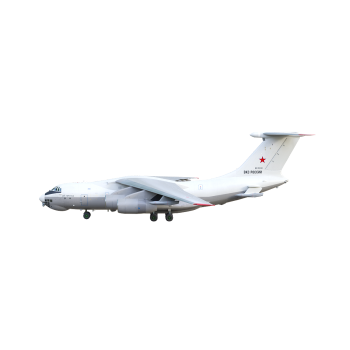
Russia Il-76MD-90A military transport aircraft

Russia Il-76MD-90A military transport aircraft

It is an advanced military transport aircraft developed by the Russian Ilyushin Aviation Consortium. It is a deep improvement of the Il-76 transport aircraft. The first flight took place in September 2012 and was delivered to the force in 2015. A new PS-90A-76 engine replaces the previous D-30KP engine, significantly improving fuel efficiency and range. The cargo hold has an internal volume of 321 cubic meters and can accommodate 126 paratroopers or 145 soldiers. It has a life span of up to 30 years and can fly 30000 hours or complete 10000 takeoff and landing. It is an important force in the strategic projection of the Russian Air Force.
Russia MiG-21SMT "Fishbed-K" fighter

Russia MiG-21SMT "Fishbed-K" fighter

It is an improved model of MiG-21 series fighter, designed by Russia's MiGaoyan Design Bureau. It is known for its upgraded aerodynamic performance, increased fuel capacity and advanced electronic countermeasures equipment. Equipped with a more powerful engine that provides fast acceleration and extremely high speeds. The fuel capacity is also increased, which significantly improves the range, but this also leads to an increase in weight. The design requires pilots to relearn how to fly and engage enemy aircraft because they quickly lose speed when maneuvering, but can quickly regain speed with powerful engines if safely disengaged and flying straight.
Russia Il-78M-90A military transport tanker

Russia Il-78M-90A military transport tanker

It is an advanced aerial tanker based on a Il-76MD-90A military transport aircraft, designed by IlyushinAviationComplex and produced by Russian aircraft manufacturer Aviastar-SP. The first flight was completed in January 2018 and was designed for the Russian Aerospace Forces (VKS) to provide aerial refueling support, especially for long-range, front-line and special mission aircraft. Equipped with a digital glass cockpit, integrated multiple electronic flight instrument displays and modern computer systems, reducing crew workload and improving mission safety.
Russian MiG-31K fighter model

Russian MiG-31K fighter model

It is an improved model developed by Russia's MiGaoyan Design Bureau on the basis of MiG-31, specially designed to carry hypersonic missiles. It inherits the high-speed and high-altitude flight characteristics of the MiG-31, while adding new avionics and weapon systems. Capable of carrying the Kh-47M2 "dagger" air-launched hypersonic missile, this missile claims to have a range of 2000 kilometers and a speed of Mach 10, and can break through the US missile defense system. This capability enables it to perform not only traditional interception missions, but also strategic strike missions. It is a key long-range interception and strategic strike platform in the Russian Air Force.
Soviet MiG-29 "Fulcrum" fighter (gray)

Soviet MiG-29 "Fulcrum" fighter (gray)

It is a fourth-generation jet fighter developed by the Soviet Miaoyan Design Bureau in the 1970 s and was designed to replace earlier models such as the MiG-21 and MiG-23. Known for its excellent maneuverability and high-speed performance, it is the main aircraft of the Soviet Air Force and the air forces of many other countries. The design focuses on air superiority and multi-purpose capabilities, capable of performing tasks in day, night and complex weather conditions. The aerodynamic design includes a wing-to-body fusion body, a large wing and a double vertical tail, which provide excellent lift and maneuverability. The power system is provided by two Klimov RD-33 afterburner turbofan engines.
Russian MiG-31 "Foxhound" interceptor (gray)

Russian MiG-31 "Foxhound" interceptor (gray)

It is a Soviet/Russian tandem two-seater all-weather interception fighter designed by Mikoyan and Gleevich Design Bureau. It was developed to replace the MiG-25 "Foxbat" and was designed to intercept high-speed, high-altitude targets. It first flew in 1975 and entered service in 1983. It has an upper single wing, double vertical tail and air intake layout on both sides, with a captain of 22.69 meters, a wingspan of 13.46 meters and a height of 6.15 meters. It is equipped with two D-306 afterburner turbofan engines. Known for its high speed, long range, large bomb load and strong interception capability, it is still one of the main fighters of the Russian Air Force.
Russian MiG1.44 "Flatpack" technology demonstrator

Russian MiG1.44 "Flatpack" technology demonstrator

It is a technology demonstrator developed by the Russian Mikoyan Design Bureau in the 1990 s to demonstrate the technology of the next generation of fighter jets. The design has stealth characteristics and adopts the duck taeless delta wing design, which is the first fighter plane in the Soviet Union to adopt this design. The power system includes two NPOSaturnAL-41F variable cycle turbofan engines. Despite its limitations in stealth design, it occupies an important place in aviation history, symbolizing Russia's technological ambitions and challenges in military aviation. The project was canceled in 1997, but its technical demonstration influenced subsequent fighter designs.
Russian MiG-35 fighter

Russian MiG-35 fighter

NATO code name: "Fulcrum-F" is a four-and-a-half-generation multi-purpose fighter developed by Russia's Mikoyan Design Bureau on the basis of MiG -29M/M2 and MiG -29K/KUB technologies (according to the US-Russian fighter generation standard). It made its public debut in 2007 and entered service with the Russian Air Force in 2019. The design goal is to improve the handling performance, expand the use and enhance the combat effect. Its maximum take-off weight is 30% higher than that of the MiG -29M2, so it is classified as a medium-weight fighter. The model is being introduced to the international market.
Russian MiG1.42MFI multi-role front-line fighter
Russian MiG1.42MFI multi-role front-line fighter

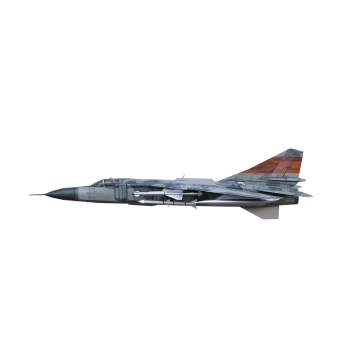
It is a technology demonstrator developed by Russia in the early 1990 s to demonstrate the technology of the next generation of fighter jets. The design has stealth characteristics, adopts variable geometry air inlet and advanced avionics system, including NIP-NO14 phase array controlled pulse Doppler radar and rear-view self-defense radar. The shape was designed with invisibility in mind, although Western observers were skeptical. It was not put into production due to economic problems and the high cost of the project. Nevertheless, the technical demonstration provided valuable experience for the Russian aviation industry and influenced subsequent fighter design.
Soviet MiG-23 "Flogger" multi-role fighter (gray-blue fan color)

Soviet MiG-23 "Flogger" multi-role fighter (gray-blue fan color)

It is a multi-purpose fighter developed by the Soviet Union in the late 1960 s and designed by the Mikoyan-Gleevich Design Bureau. It debuted in 1970 and served in the air forces of the Soviet Union and its allies for the next few decades. The design goal is to find a balance between high speed and high maneuverability. It has a variable sweep wing design, which can adjust the wing sweep angle under different flight conditions to adapt to different mission requirements. As a multi-role fighter, the main uses include air superiority combat, ground attack and tactical reconnaissance, and can carry a variety of weapons.
Soviet MiG-23 "Flogger" multi-role fighter (dark green fan color)

Soviet MiG-23 "Flogger" multi-role fighter (dark green fan color)

It is a multi-purpose fighter developed by the Soviet Union in the late 1960 s and designed by the Mikoyan-Gleevich Design Bureau. It debuted in 1970 and served in the air forces of the Soviet Union and its allies for the next few decades. The design goal is to find a balance between high speed and high maneuverability. It has a variable sweep wing design, which can adjust the wing sweep angle under different flight conditions to adapt to different mission requirements. As a multi-role fighter, the main uses include air superiority combat, ground attack and tactical reconnaissance, and can carry a variety of weapons.
Soviet MiG-23 "Flogger" multi-role fighter (fan color)

Soviet MiG-23 "Flogger" multi-role fighter (fan color)

It is a multi-purpose fighter developed by the Soviet Union in the late 1960 s and designed by the Mikoyan-Gleevich Design Bureau. It debuted in 1970 and served in the air forces of the Soviet Union and its allies for the next few decades. The design goal is to find a balance between high speed and high maneuverability. It has a variable sweep wing design, which can adjust the wing sweep angle under different flight conditions to adapt to different mission requirements. As a multi-role fighter, the main uses include air superiority combat, ground attack and tactical reconnaissance, and can carry a variety of weapons.